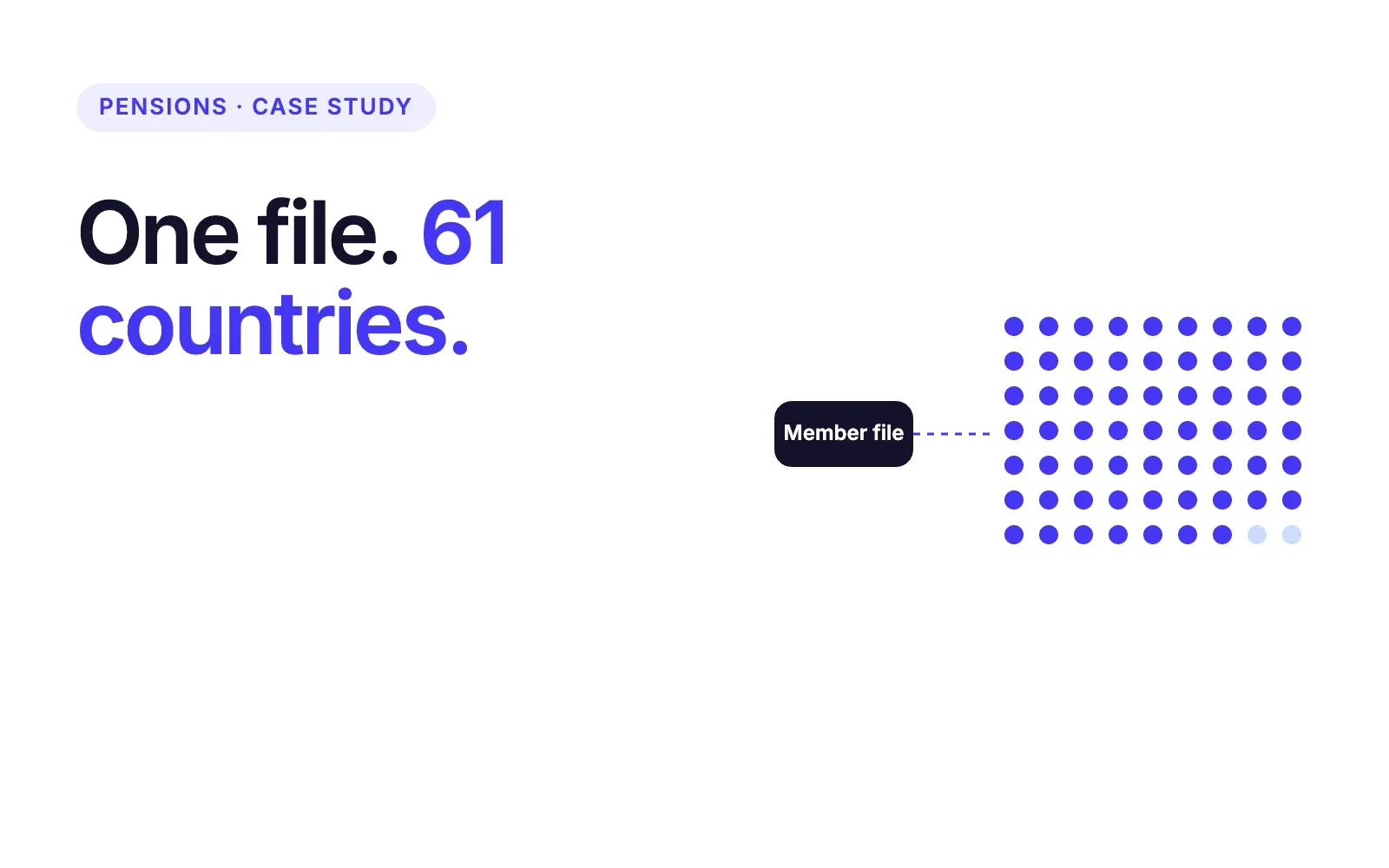
Pension Scheme Data Readiness: Why Clean Data May Not Be Buy-out Ready
A pension record can be complete, correctly formatted and still fail to reflect the member behind it.

That distinction is becoming increasingly important as more pension schemes prepare for buy-in, buy-out and other endgame decisions. A recent Professional Pensions article on data readiness makes the case that preparing for buy-out requires far more than simply cleaning scheme data. Trustees need to understand their data, validate it and give insurers confidence in the information provided.
We agree. But it also raises a further question: are the processes traditionally used to assess pension scheme data still sufficient for what trustees and insurers need to achieve today?
What is pension scheme data readiness?
Pension scheme data readiness means that member data is complete, accurate, current and sufficiently understood for its intended purpose. For a buy-in or buy-out, it should enable insurers to assess the scheme with confidence and support an efficient transaction. For trustees, it should support good governance, accurate benefits and positive member outcomes.
Why clean pension data is not always ready data
Industry-standard data checks remain an essential foundation. They can identify missing fields, invalid formats, duplicate entries and known inconsistencies. Yet a record can pass those checks while the information within it is no longer true.
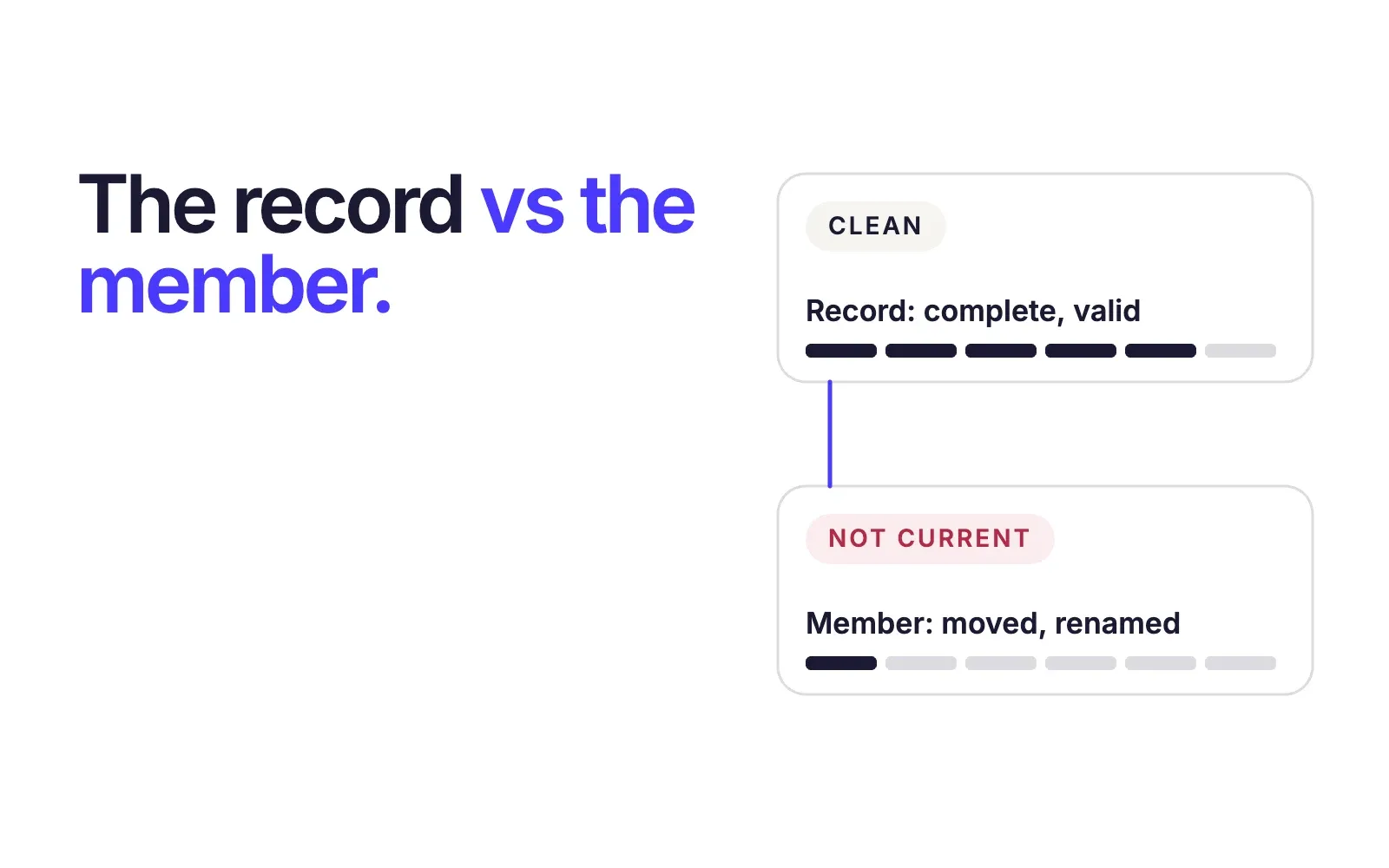
- An address may be correctly formatted but years out of date.
- A full name and date of birth may be present, but the member may have changed their name.
- A member may have moved overseas even though the scheme retains only a UK address.
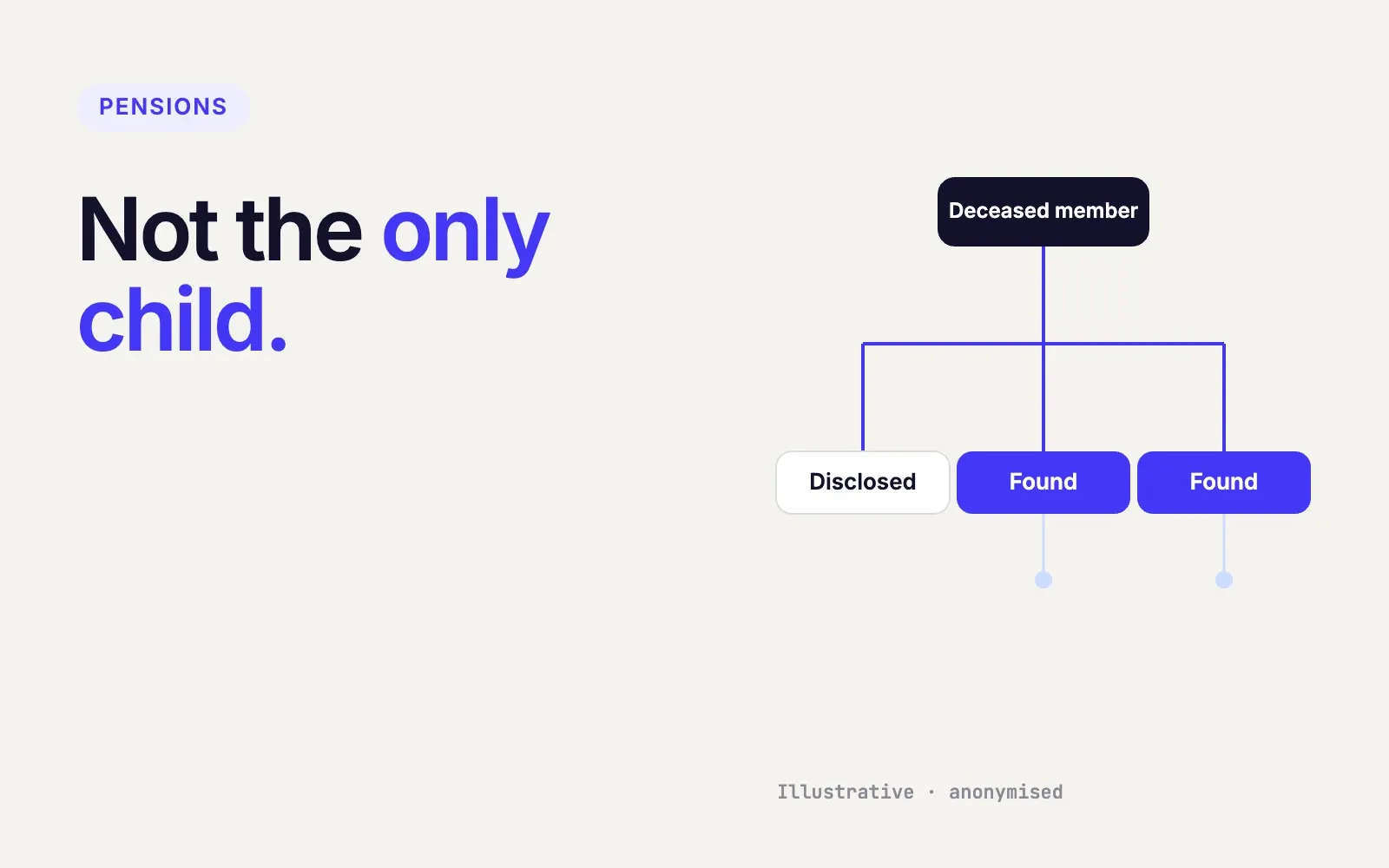
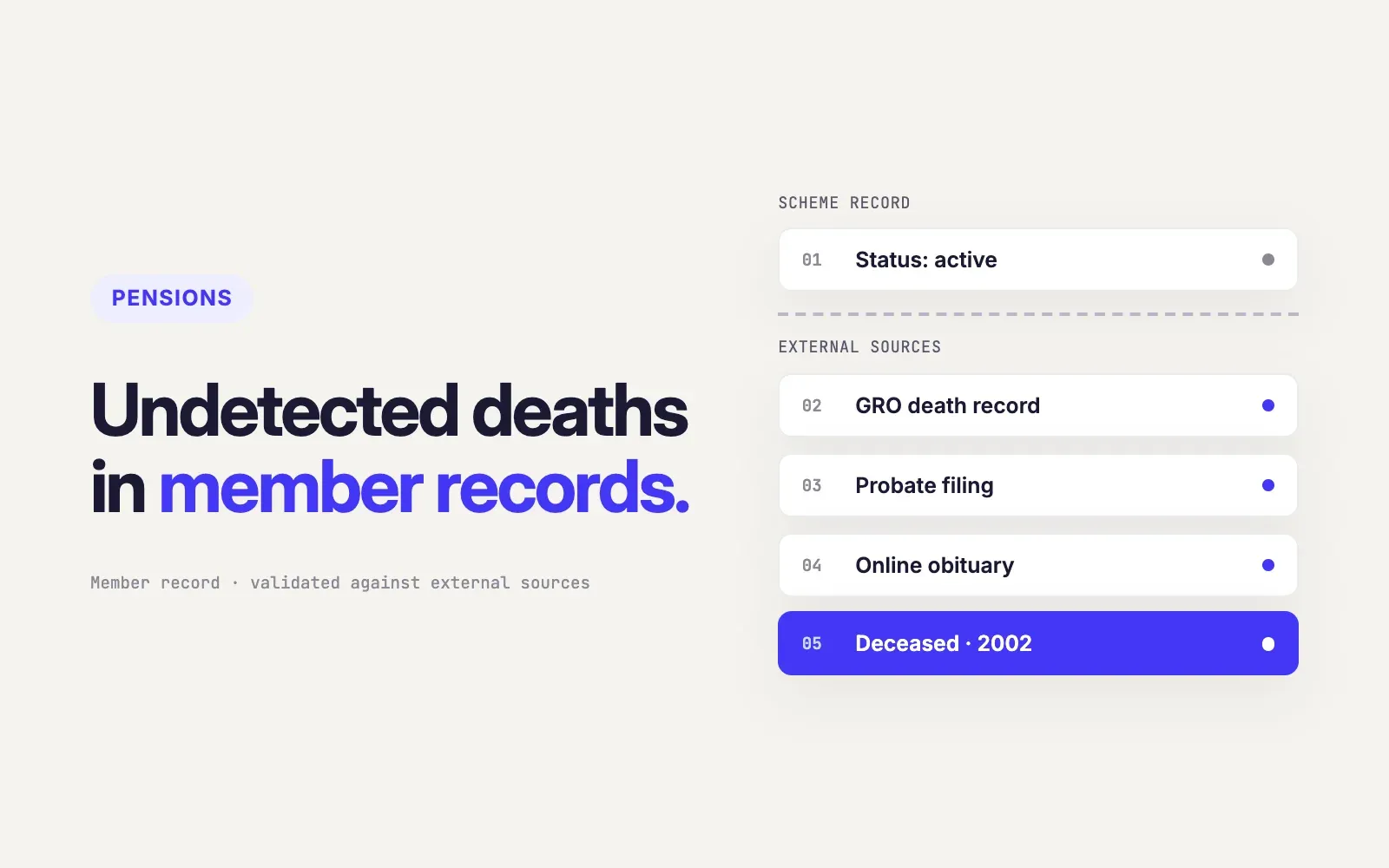
- A member may have died without the scheme being notified.
- Separate records may relate to the same person, or details stored together may not belong to the same individual.
This is consistent with The Pensions Regulator’s guidance on scheme member data quality, which distinguishes between the presence of data and its accuracy. The regulator expects trustees to manage data quality actively, including regular reconciliation, member tracing and mortality screening.
Five dimensions of data readiness
Trustees remain accountable for pension scheme data quality, even when the day-to-day work is delegated to an administrator. A more meaningful review should consider five dimensions:
- CompletenessAre the required data fields populated?
- ValidityDoes the information follow the expected format and rules?
- AccuracyDoes the information reflect the correct member?
- CurrencyDoes it reflect the member’s circumstances today?
- ConnectivityCan the scheme confidently identify and reach that person?
The first two dimensions are relatively straightforward to test within the existing dataset. The remaining three often require schemes to look beyond the record itself.
The limits of a record-led approach to member tracing
If a scheme holds an old UK address, a process focused primarily on confirming or updating that address may miss that the member has established an entirely new life overseas.
A conventional process may conclude that no new address has been found. A broader identity investigation may establish that the member now uses a different surname, lives in another jurisdiction and can be connected to current contact information through multiple corroborating signals. Both processes may have been performed correctly. They are working towards different definitions of success.
Is the data sufficiently understood and validated for the outcome we are trying to achieve?
Improving readiness without unnecessary work
- Define the outcomeSuch as dashboard matching, member reconnection or buy-out readiness.
- Agree the standardWhat complete, accurate and current data means for that outcome.
- Test beyond formatLook past field presence and formatting.
- Find low confidenceIdentify contradictions, stale information and low-confidence records.
- PrioritiseRank cases according to risk and likely impact.
- DocumentRecord the evidence, methodology and changes made.
- MaintainPut a process in place to maintain data quality over time.
For pension schemes, true data readiness means more than having a clean file. It means being able to identify, understand and reach the people behind the data with confidence.
Sources · Professional Pensions, “Endgame strategies” · The Pensions Regulator, scheme member data quality guidance · PASA, data readiness for buy-ins and buy-outs.