Undetected Deaths in Pension Member Records
A recent data review identified deceased members still recorded as active – including deaths dating back to 2002.

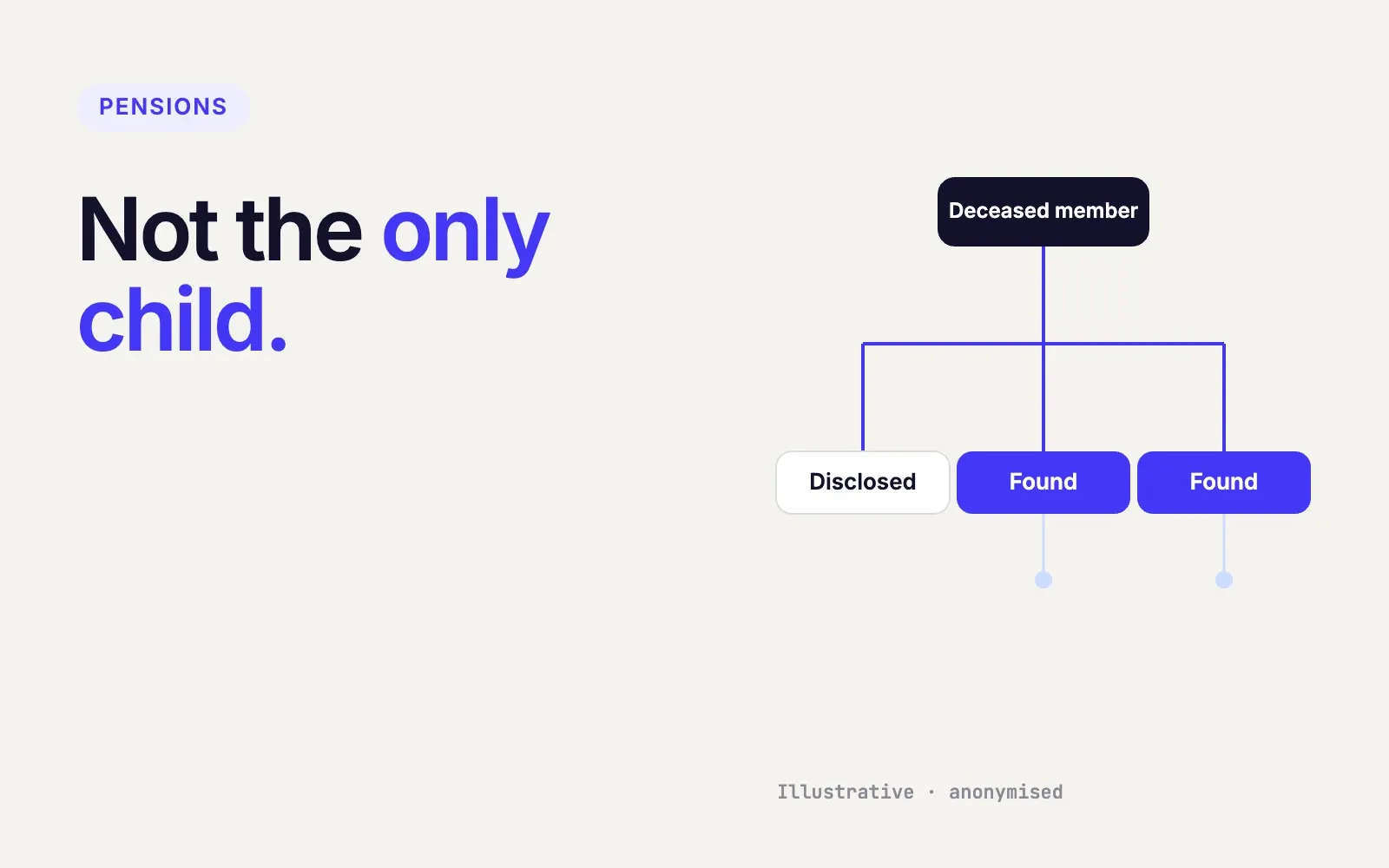
A recent pension data cleanse for a large UK industrial defined benefit scheme identified that approximately 2% of members were deceased, including several individuals whose deaths dated back more than twenty years.
Two members recorded as active in the scheme records were found to have died in 2002.
For large defined benefit schemes, discrepancies of this scale can represent a material number of member records requiring validation before insurer pricing can proceed.
No administrative exception had been raised. The discrepancy only became visible once member records were validated against external sources.
Observation: member data inaccuracies can remain embedded within scheme records for extended periods without triggering operational alerts.
Implication: when schemes approach buy-in or buy-out transactions, these discrepancies may introduce uncertainty during insurer due diligence.
Insurer due diligence
When schemes approach buy-in or buy-out transactions, insurers undertake detailed due diligence on the member population. Confidence in the integrity of scheme data therefore becomes an important consideration.
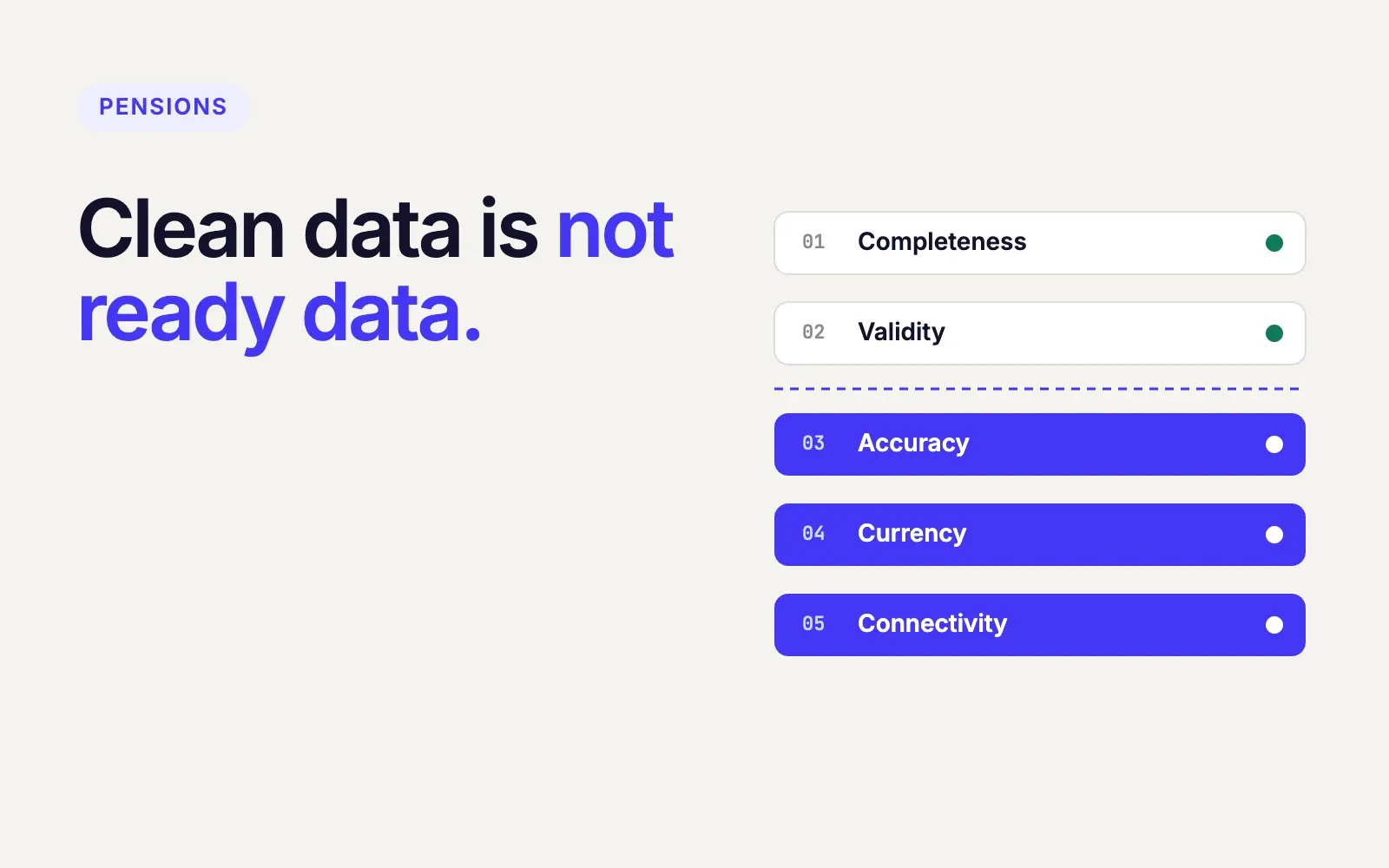
Insurers typically review several areas, including:
- mortality status
- member identity validation
- geographic location of members
- completeness of contact records
- accuracy of benefit entitlements
Where information cannot be independently validated, additional verification work may be required before pricing can be confirmed. In some cases this can extend transaction timelines or introduce further assumptions into pricing models.
The Pensions Regulator also emphasises that trustees are responsible for maintaining complete and accurate member data as part of effective scheme governance.
Why data gaps occur
Pension schemes operate over long time horizons. Member records may remain in administrative systems for several decades and often pass through multiple administrators and technology platforms.
Over time, several structural issues can arise. Members may pass away without the scheme being notified, particularly where contact with the scheme has been lost.
In England and Wales alone, over half a million deaths are registered each year, according to the UK Office for National Statistics (ONS). Reconciling long-standing member records against this scale of national mortality data is therefore an important element of maintaining accurate scheme populations.
Increasing international mobility also reduces visibility within domestic datasets. Addresses and contact details may remain unchanged for extended periods, and historical system migrations can introduce inconsistencies across records.
These issues do not necessarily affect day-to-day administration but can become visible when scheme data is examined more closely during transaction preparation.
External validation sources
To address these risks, schemes increasingly supplement internal records with additional verification sources such as:
- civil registration data, including GRO death records
- probate filings and estate notices
- online obituary publications
- open-web signals, including professional networks and social media activity
Platforms such as Heka help consolidate these signals into structured intelligence. This allows schemes to validate member records, identify mortality indicators and improve confidence in the accuracy of their member population.
Conclusion
Undetected deaths in scheme records illustrate a broader issue: member data can deteriorate silently over time.
Routine administrative processes may not surface these discrepancies. However, when schemes approach buy-in or buy-out preparation, such gaps can become operationally and financially relevant.
Early validation of member data can therefore reduce uncertainty, support insurer due diligence and improve readiness for endgame transactions.