The Modern Fraud Stack: How Decisions Actually Get Made (and Where They Break)
An enterprise-grade fraud stack is not a product. It is a latency-constrained decisioning system in which multiple layers operate as a single flow.

The challenge is not assembling the stack. Most institutions already have the core components in place, often across multiple vendors and internal systems. The challenge is understanding how those components interact in practice – and where the system produces decisions that appear well-supported, but are not.
The 8 layers of the fraud stack
- Signal collectionDevice fingerprinting, IP intelligence, behavioral biometrics and identity data captured at the point of interaction.
- Identity verificationAttributes validated against trusted sources such as credit bureau headers, SSA records and sanctions lists.
- Data enrichmentEmail, phone and address intelligence and consortium signals that expand the identity profile.
- Risk scoringMachine learning models turn signals into probabilistic risk scores for specific fraud types.
- Rules engineDeterministic rules enforce policy and known fraud patterns.
- Orchestration and decisioningSignals, model outputs and rules aggregated into approve, review or decline.
- Step-up and case managementIntermediate cases escalated to additional verification or human investigation.
- Feedback and model governanceConfirmed outcomes fed back to retrain models and refine rules.
This architecture is broadly consistent across the industry. The presence of these layers, however, does not guarantee effective decisioning.
Where modern fraud stacks fail
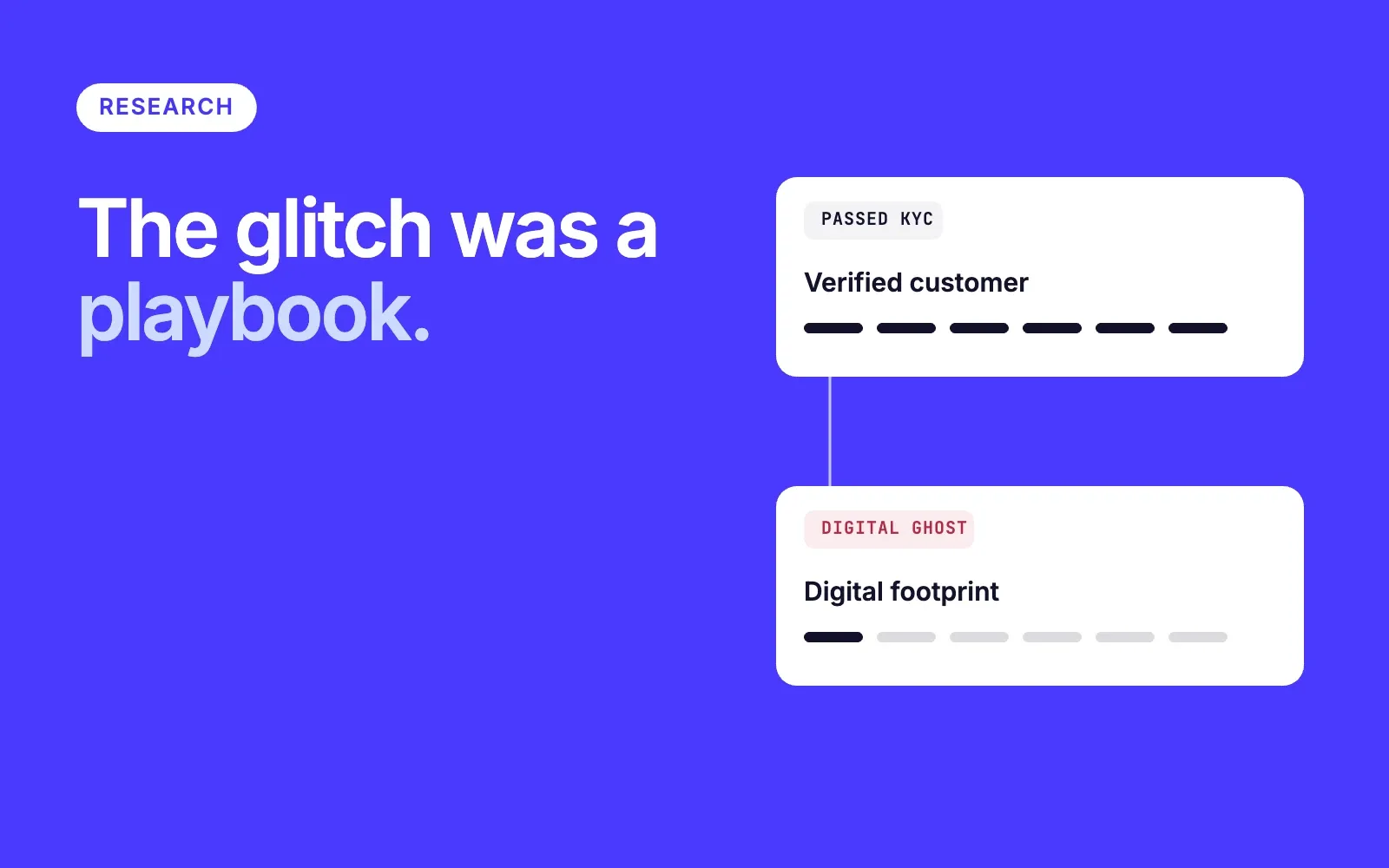
Failures rarely occur because a layer is absent. They occur when a layer produces an output that appears sufficient, but lacks underlying depth. An identity may pass bureau and SSA validation, present no device or velocity risk, and return acceptable enrichment signals. Yet the identity may still lack coherence across time.
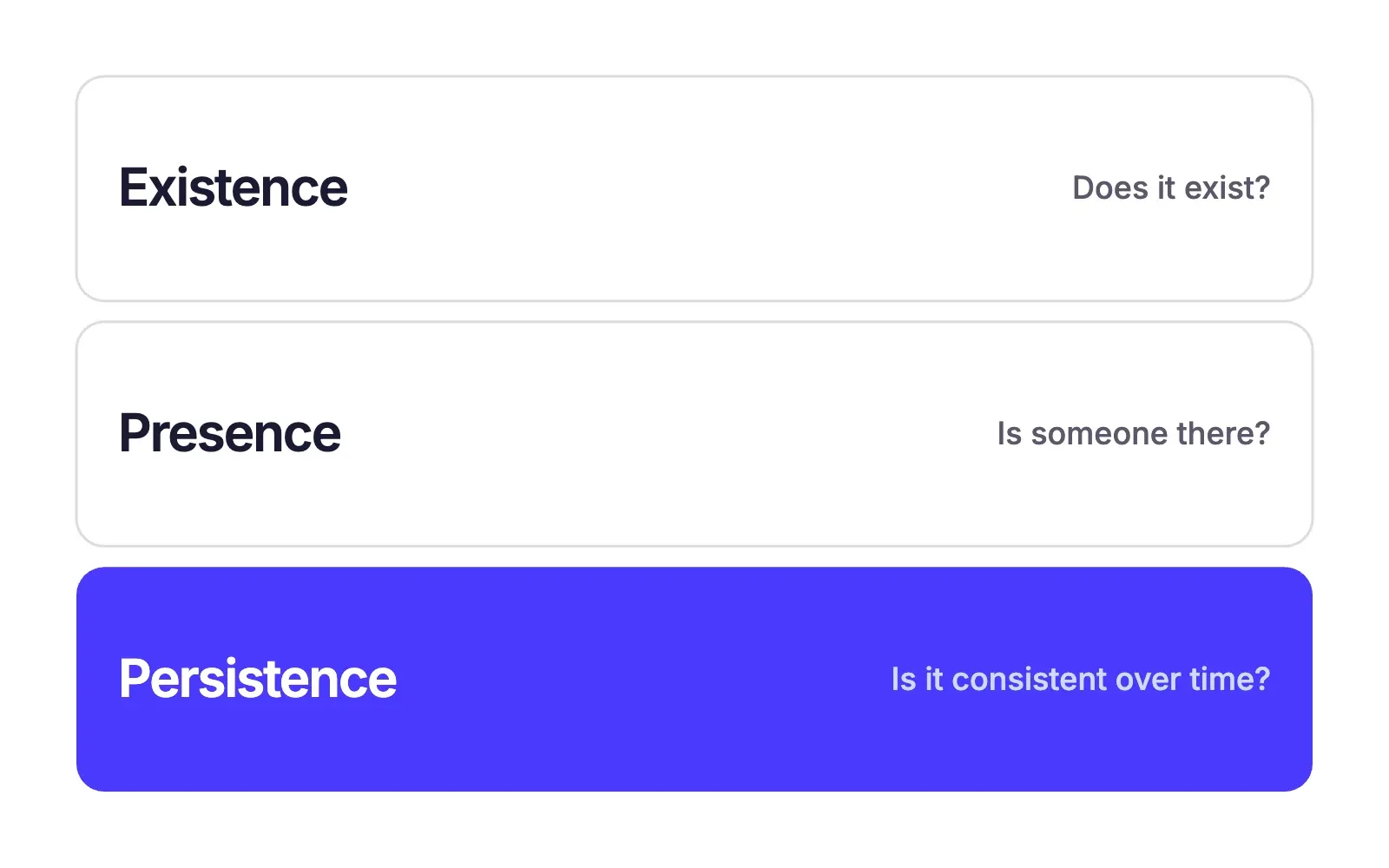
Most stacks are effective at confirming that an identity exists. Many can confirm that a user is physically present. Far fewer can determine whether the identity behaves like a reliable individual over time.
Structural drivers of these gaps
Latency constraints limit the ability to incorporate deeper or slower data sources. Scale requires reliance on generalized models rather than case-specific analysis. Cost and conversion pressures reduce tolerance for additional friction or enrichment calls. As a result, systems tend to emphasize structural validation (existence) and reactive signals (prior exposure). Both are necessary. Neither is sufficient to fully resolve identity risk.
Fraud does not typically exploit missing components. It exploits the assumptions created by partial signal coverage.
From architecture to evaluation
- Which layers are driving final decisions?
- Where is the system relying on structural validation alone?
- Which signals appear present, but are not materially influencing outcomes?
Sources · Interviews and hands-on work with fraud teams across financial services.